

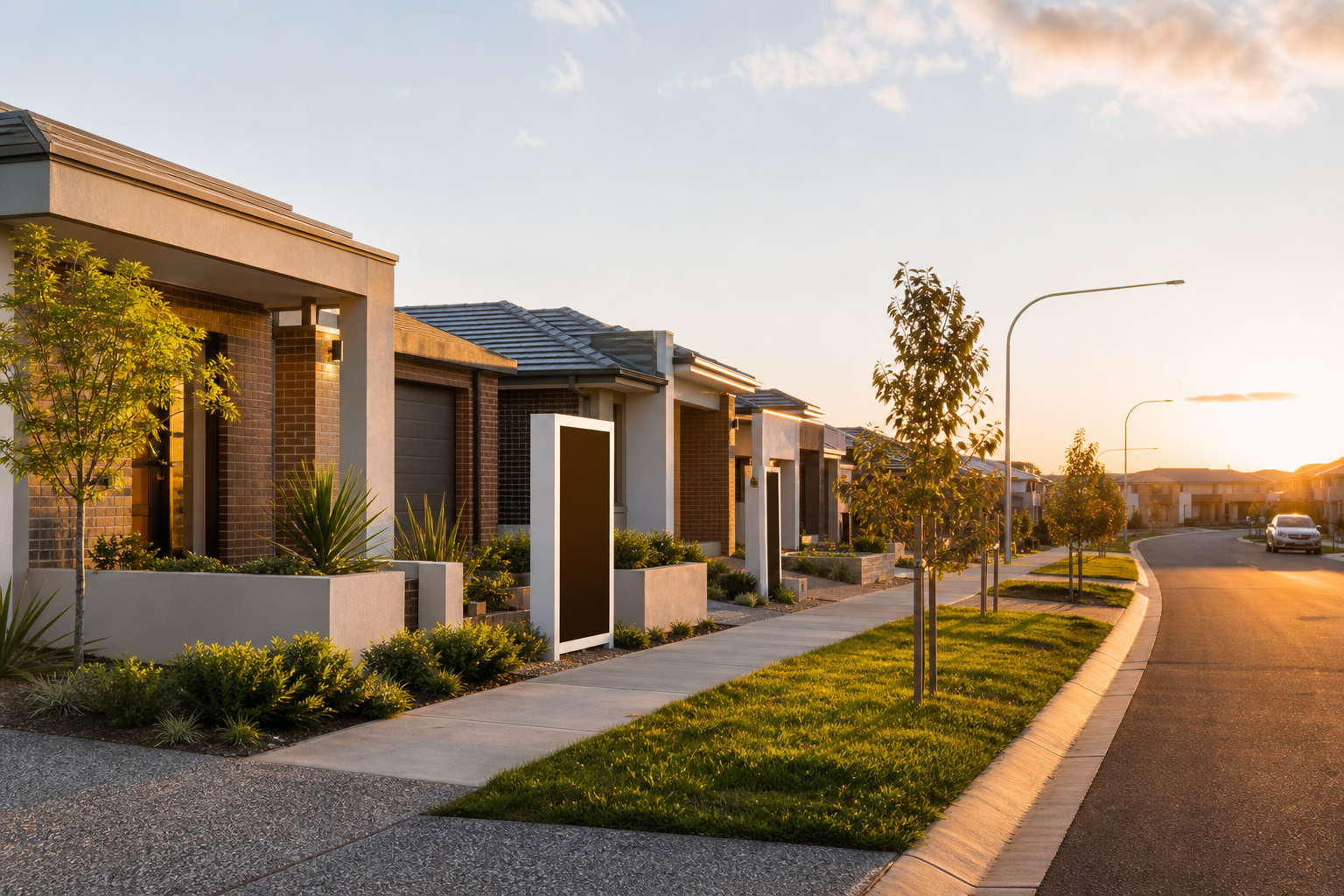
Yes—October 2026 is a good time to buy investment property in Australia for prepared, finance-ready investors. Inner Circle Group sees a genuine buyer’s-market window: values are easing, listings are rising, investor competition is thinner, rental demand remains tight, and selected new-build builder discounts and developer rebates are available now that may not survive the next six months.
Why is this a buyer’s-market window, not a bad investment market?
This is a buyer’s-market window because prices are softening while long-term housing demand remains structurally undersupplied. The mistake is thinking falling values automatically mean a bad market. For investors with strategy, finance and patience, softer sentiment can be exactly when better buying conditions appear.
The headline data is uncomfortable, which is precisely why opportunity exists. Cotality’s Home Value Index fell 1.1% nationally in September 2026, taking Australian dwelling values 5.2% below their March 2026 peak. ABC News also reported that 97% of capital-city suburbs recorded value declines over the three months to September 2026.
That is not a reason to hide. It is a reason to sharpen your brief, know your numbers and negotiate harder. When almost everyone is nervous, a prepared investor can move with less competition, more choice and stronger leverage.
Ben Ferrett, Founder & CEO of Inner Circle Group: "Most investors only feel safe once the crowd is back. That is backwards. The money is usually made in the uncomfortable part of the cycle, when the data is still strong but sentiment is weak."
This is why ICG does not chase headlines. We buy fundamentals: jobs, infrastructure, land supply, rental demand, liveability and suburb-level scarcity. A buyer’s market rewards research. A boom rewards speed. Right now, you need both.
What is pushing buyers and investors to the sidelines right now?
Higher rates and weaker sentiment are pushing buyers to the sidelines right now. The Reserve Bank has made it clear that inflation risk has not disappeared, and borrowers are feeling that through tighter serviceability and bigger repayment buffers.
At its 29 September 2026 meeting, the RBA Monetary Policy Board unanimously lifted the cash rate target by 25 basis points to 4.60%. The RBA also said the strongest argument for raising rates was that several upside inflation risks identified in August had materialised or were building, and that it could increase the cash rate further if required.
That language matters. Buyers are hesitating because finance feels harder, the news cycle is negative and no one wants to buy before the bottom looks obvious. But obvious usually arrives late.
The investor lending numbers show the pullback. In the June quarter 2026, the number of new investor loan commitments for dwellings fell 8.6% quarter-on-quarter, while the value of investor loan commitments fell 10.2%, according to the ABS. In plain English: fewer investors are competing.
How much negotiating power has returned to buyers?
Negotiating power has returned because stock is building, vendors have more competition, and buyers are no longer fighting over every listing. SQM Research’s September numbers are the clearest sign yet that the market has shifted in favour of those who can act.
Nationally, total residential property listings rose 2.6% month-on-month in September 2026 to 276,839 dwellings, and were 21.6% higher than September 2025. More listings means more comparison, more vendor pressure and more room for smart negotiation.
The lift is especially important in major ICG markets. Brisbane listings were 43.5% higher year-on-year in September 2026, Adelaide listings were 39.5% higher, and Melbourne listings were 30.3% higher. SQM also reported that distressed residential listings rose 8.0% in September 2026 to 4,872 properties nationally and were 29.2% higher than September 2025.
That does not mean you buy anything cheap. Cheap property can stay cheap for a reason. It means you can press harder on price, terms, inclusions and settlement structure when the property is already in a suburb with strong long-term fundamentals.
SQM Research put it bluntly: conditions were shifting in favour of buyers, with stock building and national asking prices easing over the month, led by Brisbane, Perth and Adelaide. For ICG, that is a big signal because Brisbane, Perth and Adelaide are core markets we research deeply and treat with equal seriousness.
Are builder discounts and developer rebates available right now?
Yes—on selected new-build opportunities, ICG is seeing builder discounts and developer rebates that materially improve the conversation for prepared investors. This is one of the most underappreciated parts of the current window because incentives are usually strongest when developers and builders want momentum before confidence returns.
To be clear, a rebate does not make a weak asset strong. A discount in the wrong suburb is still a bad deal with a bow on it. But when the suburb data stacks up, the product suits the tenant base and the numbers pass conservative modelling, incentives can improve your entry position and give you negotiating leverage that may be gone quickly.
Ben Ferrett: "Builder discounts and developer rebates are the part of this market most buyers are underestimating. In my view, many of the best incentives simply won’t exist six months from now once stock clears and confidence returns."
This is why access matters. Inner Circle Group members typically see selected stock 4-6 weeks before public release through our off-market property in Australia network. In this market, that can mean better lots, better orientation, stronger product choice and the chance to negotiate before a project is widely marketed.
If values are falling, why shouldn’t investors simply wait?
Investors should not automatically wait because rental demand and housing undersupply are still doing the heavy lifting underneath the price cycle. Waiting can feel safe, but it can also mean losing vendor flexibility, off-market choice and today’s builder incentives.
The rental market is still tight. SQM Research reported that Australia’s national residential vacancy rate rose to 1.4% in September 2026, while Brisbane remained at 0.9%, Perth at 0.6% and Adelaide at 0.6%. In our world, those sub-1% vacancy markets demand attention.
Rents are still moving, too. National advertised combined rents rose 0.3% over the 30 days to 12 October 2026 and were 7.6% higher year-on-year, with house rents up 8.4% and unit rents up 6.3%. In Brisbane, combined advertised rents were $754.49 per week over the 30 days to 12 October 2026, up 7.2% year-on-year, while vacancy remained 0.9%.
That is the tension investors should understand. Prices can soften while rents stay tight. That is not a contradiction; it is the result of credit conditions hitting buyer sentiment while tenants still need housing.
Ben says it often inside our strategy sessions: "The market can scare buyers and squeeze tenants at the same time. If you only read price headlines, you miss the rental signal. Gut instinct is for rookies; we buy where the data stacks up."
We saw this in real life with Rhenda, a Victorian investor who bought in Deception Bay, Queensland through Ben in 2024. She was nervous about buying outside Victoria, which is normal. The property had a tenant secured before it was rent-ready, and a recent valuation came in more than $200,000 above the purchase price. That result is not a promise for anyone else; it is an example of what can happen when the suburb, product and timing align.
What does population growth and housing supply say about the next cycle?
Population growth and housing supply data point to an underlying shortage that has not been solved. Price cycles move faster than construction pipelines, which is why investors should be careful about assuming a short-term correction fixes a long-term housing deficit.
Australia is still adding people. The ABS reported that Australia’s population reached 27,921,150 at 31 March 2026, with annual growth of 392,700 people, including net overseas migration of 292,100. Every additional household needs somewhere to live, whether as owner-occupiers, tenants, students, new families or downsizers.
Supply is not keeping up with the ambition. The National Housing Supply and Affordability Council estimated that Australia would deliver 980,000 gross new homes over the 2024-25 to 2028-29 Housing Accord period, only 82% of the 1.2 million target, reaching the target around September quarter 2030 rather than June 2029.
That is the bigger story. Borrowing costs are scaring buyers today, but population and supply fundamentals are still applying pressure over the medium term. That mismatch is why the window exists.
Why do new builds deserve extra attention in this window?
New builds deserve extra attention because they sit at the intersection of tenant demand, modern product, housing supply, developer incentives and upcoming tax settings. ICG only sources brand-new investment property, including house and land, townhouses and apartments, because product quality matters when tenants have choice and lenders scrutinise everything.
There is also a major structural policy shift investors must understand. The ATO states that under the 2026-27 Federal Budget reforms, negative gearing for residential property is limited to new builds from 1 July 2027, while established properties bought after 7:30pm AEST on 12 May 2026 can only offset losses against residential rental income and capital gains. The same reform replaces the 50% CGT discount with indexation plus a 30% minimum tax, while new-build investors can choose either the 50% discount or indexation.
Speak to your accountant about your own tax position. But strategically, this is a massive reason to understand new build investment property properly instead of defaulting to old stock just because it feels familiar.
New builds are not automatically superior. The wrong new build in the wrong corridor can be a dud. But the right new build, secured before public release, in a tightly held growth corridor with sensible product design and tenant depth, can be a powerful portfolio asset.
Where should investors be looking in Australia right now?
Investors should be looking selectively in undersupplied growth corridors, not broadly across the map. A buyer’s market creates bargains and traps at the same time, so suburb selection and product selection are everything.
ICG is actively focused on major capital cities and growth corridors where the numbers support the brief: South East Queensland, investment property Brisbane opportunities, investment property Perth corridors, investment property Adelaide locations, Melbourne’s growth corridors and New South Wales markets including Sydney’s growth areas, the Hunter and the Central Coast.
The key is not choosing a city because someone said it is hot. The key is identifying a suburb with multiple demand drivers, limited future competing supply, access to employment, a tenant profile that matches the product, and a price point that still makes sense after conservative modelling.
How does Inner Circle Group assess this window?
Inner Circle Group assesses this window through suburb-level data, physical site inspection and product-mix analysis before we show a client an opportunity. We are not guessing where the next cycle lands; we are scoring suburbs against the fundamentals that usually drive resilience and demand.
Our how to choose a suburb to invest in framework, the ICG Suburb Scoring Engine, rates every suburb across five weighted pillars: Future Growth Catalysts at 25%, Supply & Demand at 20%, Liveability & Connectivity at 20%, Economics at 20%, and Demographics at 15%. We then layer in product-mix analysis and compare the suburb side-by-side with the five nearest suburbs.
That matters right now because a broad correction can make everything look cheaper. Our job is to separate value from value traps. A cheaper property with poor tenant demand, too much competing supply or weak employment access is not a bargain; it is a liability with fresh paint.
Ben’s view is blunt: "Most investors lose money in the five minutes they spend falling in love with a kitchen. We spend weeks on the data, then we walk the site, then we ask whether we would buy it ourselves. If the answer is no, our members do not see it."
ICG also builds portfolios, not one-off hot tips. That means we think about diversification across markets, cash flow pressure, land exposure, tenant depth, build risk, settlement timing and your long-term borrowing pathway. Post-settlement support matters as well, which is why our Member Experience Managers stay involved after the purchase.
What are the key takeaways for investors?
The key takeaway is simple: the window is open, but it is not open for lazy buying. This market rewards the investor who is organised before the next investor rush begins.
- Values are softer: national dwelling values have pulled back, creating more room to negotiate.
- Listings are higher: more stock gives prepared buyers more choice and leverage.
- Investor competition is thinner: lending data shows many investors have stepped back.
- Builder incentives are real: selected builder discounts and developer rebates are available now, but the best may not remain once confidence returns.
- Rental fundamentals remain tight: Brisbane, Perth and Adelaide still have vacancy rates below 1%.
- Population pressure has not disappeared: Australia is still adding people while housing delivery is tracking below target.
- Selection is everything: buy the suburb, product and tenant profile — not the headline or the rebate alone.
What should prepared investors do next?
Prepared investors should get finance assessed, define the buy box and start reviewing data-backed opportunities now. Do not wait until the market feels comfortable. Comfort is expensive.
Your first step is borrowing capacity. Speak to a broker or lender and understand your real position, including buffers. If tax, SMSF or ownership structure matters, speak to your accountant or licensed adviser. ICG can connect you with the right professionals, but the advice must be personal to you.
Your second step is suburb selection. Look for infrastructure, employment access, population inflow, rental depth, limited competing supply and a product that suits the tenant base. Your third step is access. In a buyer’s-market window, the best deal is often secured before the broader market realises conditions have shifted.
If you want to move before the next wave of investors comes back, do not do it alone and do not buy on emotion. Book your free strategy session with the Inner Circle team or call 1300 037 344. We will help you pressure-test your position, identify the right markets and decide whether this buyer’s-market window belongs in your portfolio strategy.
Frequently asked questions
Is now a good time to buy an investment property in Australia?
For finance-ready investors with a clear strategy, yes, the current market is presenting a buyer’s-market window. Values have softened, listings have increased and investor competition has eased, while rental demand in key markets remains tight. The opportunity is selective, not automatic.
Should I wait for Australian property prices to fall further?
Trying to pick the exact bottom is risky. By the time the bottom is obvious, competition often returns and vendors become less flexible. A better approach is to buy only when the suburb, product, cash flow and long-term fundamentals stack up under conservative assumptions.
Are builder discounts and developer rebates available right now?
Yes, on selected new-build opportunities, ICG is seeing builder discounts and developer rebates in the current softer market. They should be treated as a bonus, not the reason to buy. The suburb, product, rental demand and long-term strategy still have to stack up first.
Which Australian markets does Inner Circle Group like in this cycle?
ICG researches major capital-city growth corridors across Brisbane and South East Queensland, Perth, Adelaide, Melbourne and New South Wales markets including Sydney’s growth areas, the Hunter and the Central Coast. The suburb and product matter more than the city label.
Why are new builds important for investors now?
New builds can offer modern tenant appeal, supply relevance, access to selected builder or developer incentives, and a clearer fit with upcoming tax settings for residential property. They are not automatically good investments, so ICG still runs every opportunity through suburb scoring, product-mix analysis and site review.
How does Inner Circle Group find opportunities before the public market?
ICG works through developer and project relationships to access selected new-build opportunities typically 4-6 weeks before public release. Members still receive research, strategy support and post-settlement guidance rather than simply being shown stock.
Sources
- Australian house prices drop for sixth straight month and more falls expected – ABC News
- Minutes of the Monetary Policy Board Meeting – 29 September 2026 – RBA
- Lending indicators, June Quarter 2026 – Australian Bureau of Statistics
- Total Property Listings – September 2026 – SQM Research
- National Vacancy Rate – September 2026 – SQM Research
- National, state and territory population, March 2026 – Australian Bureau of Statistics
- State of the Housing System 2026 – National Housing Supply and Affordability Council
- Tax reform: boosting home ownership, reforming negative gearing and capital gains tax – ATO
About the author – Ben Ferrett, Founder & CEO, Inner Circle Group
Ben Ferrett founded Inner Circle Group after more than a decade of hands-on experience in the Australian residential property market, starting with his own portfolio and then helping friends and family do the same. He has been featured in the Australian Financial Review and on Channel 7 News for his work in off-market property. Connect with Ben on LinkedIn.
Book your free strategy session with the Inner Circle team → or call 1300 037 344.
General information only. This article does not take into account your objectives, financial situation or needs and is not financial, tax or legal advice. Past performance is not a reliable indicator of future performance. Consider seeking advice from a licensed professional before making investment decisions.


